
Editorial Picks
7 Traditional Korean Restaurants Around Myeongdong — 2026 Editor's Guide
Seven canonical Korean tables within walking distance of Myeongdong — read as a quiet itinerary, not a ranking.
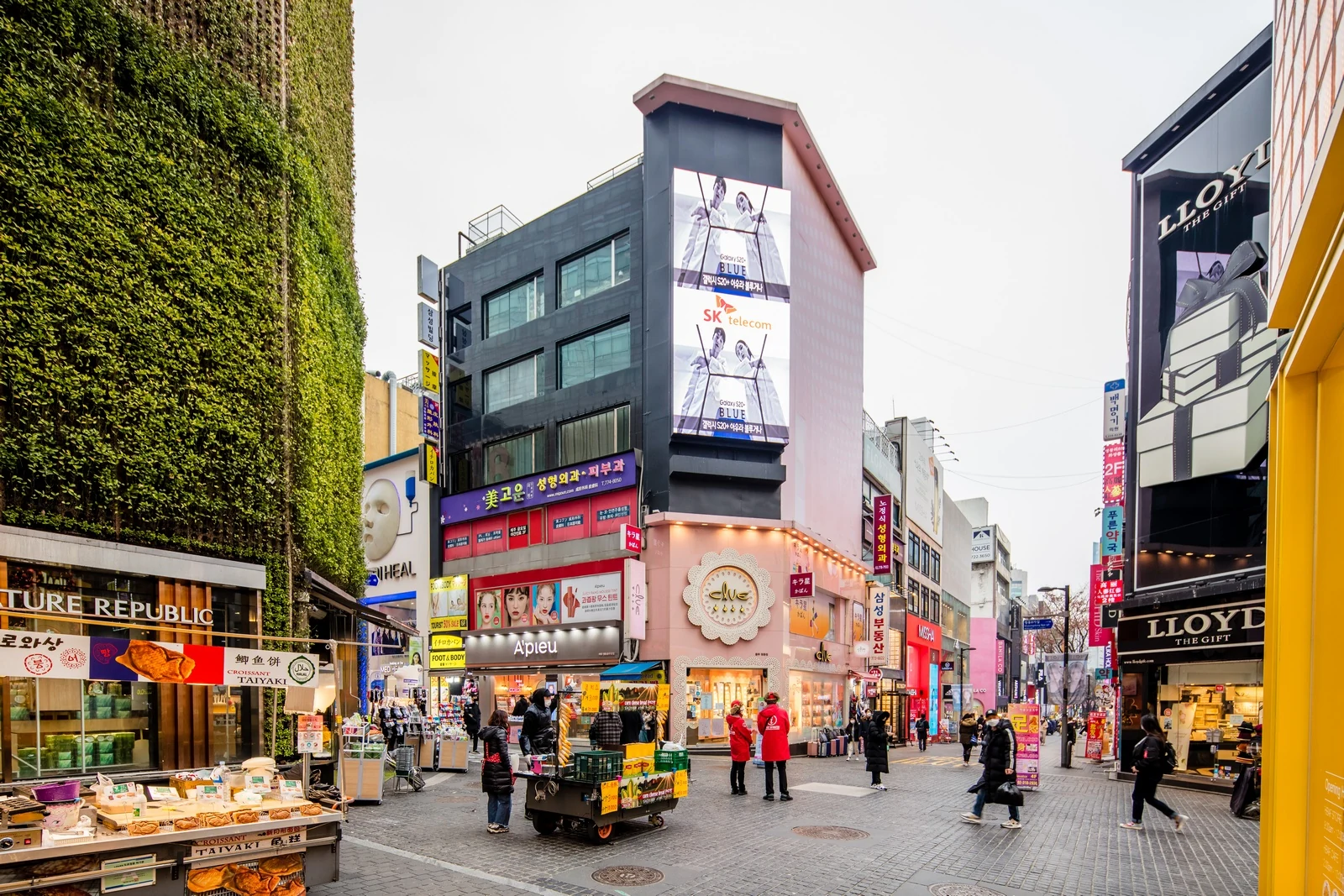
Myeongdong has a particular rhythm at lunch. The avenues thicken between noon and two, then quiet again by mid-afternoon. The good restaurants — the ones that have been here for forty, sixty, eighty years — pulse with that schedule. You learn to arrive a little before the hour. You learn to read the queue the way you read a magazine cover. There is information in how a place fills up, and information in how it empties. This editorial is built around seven such restaurants. Some sit on the Myeongdong main strip. Some are five minutes north into Euljiro's print-shop alleys. One is a fifteen-minute taxi west to Seochon, technically outside Myeongdong but inseparable from the conversation about traditional Seoul Korean cooking. The list is intentionally untiered. Featured A through Featured G describes the order we walked, not a ranking. A samgyetang house is not better than a naengmyeon house; they answer different questions about a single afternoon. What we have tried to do, instead, is sit at each table long enough to write something useful about it — the hours, the price range, the dish that defines the room, and the kind of visitor each address tends to reward. Korea's tourism authority and the Michelin Guide Korea both publish ongoing references for several of these restaurants; we cross-checked dates and addresses against those public sources, then walked the doors ourselves. The result is a working editorial map of central Seoul's most consequential traditional Korean restaurants, organised the way a magazine actually reads — by walking pace, by hour of the day, by the question the dining room is built to answer.
How we chose these seven Korean restaurants in Myeongdong
Our methodology for the seven Korean restaurants in this Myeongdong editorial sits on four observable criteria. First, longevity. Each listed restaurant has been continuously operating in central Seoul for at least two decades, and several since the 1930s and 1960s. Continuity matters because the broth, the noodle dough, the seasoning balance — these are house languages that take generations to settle. Second, public reference. Every restaurant is cited by at least one of: the Michelin Guide Korea, the Korea Tourism Organization's English-language visit-korea portal, the Seoul Tourism Organization's visit-seoul portal, or major travel desks such as Time Out Seoul and CNN Travel. We list the sources at the foot of each Featured entry. Third, dish category integrity. The seven restaurants together cover the foundational Seoul-traditional categories a visitor will hear named on any reputable food tour: kalguksu, gomtang, samgyetang, bibimbap, Pyongyang-style naengmyeon. There is intentional category overlap on samgyetang and naengmyeon, because comparing two houses inside one category is how a reader actually learns the cuisine. Fourth, walkability. Five of the seven are inside a fifteen-minute on-foot radius of Myeongdong Station. The remaining two are inside a fifteen-minute taxi or one short subway transfer. We do not include destination restaurants that require a meaningful day-trip. Beyond these four, we held two soft filters in the back of the editorial mind. The first soft filter was multilingual menu availability, because Myeongdong is, on a typical Tuesday, a global street. The second soft filter was price legibility — every restaurant on this list has a price range a visitor can decode without anxiety. The result is seven restaurants you can plan an entire week of central-Seoul lunches around, with one dinner-capable address and one quiet bibimbap room for the kind of afternoon when the city has been very loud.
- Continuously operating for 20+ years in central Seoul
- Cited by Michelin Guide Korea, visitkorea.or.kr, visitseoul.net, Time Out Seoul, or CNN Travel
- Covers a foundational Seoul-traditional dish category
- Walkable from Myeongdong Station, or one short subway/taxi transfer
- Has a multilingual menu or English-capable staff at the door
- Has a price range that a visitor can read without negotiation
Seven Korean restaurants within Myeongdong's walking radius
The seven Featured entries below run roughly north-to-south, then west, in the order we walked them across three editorial visits. Read the H3s as a route, not a leaderboard. Addresses and hours are current as of the writing date; we recommend confirming on a same-day basis through Naver Map or Kakao Map, particularly for the Euljiro old-school addresses that occasionally close mid-afternoon.
Featured A — Myeongdong Kyoja
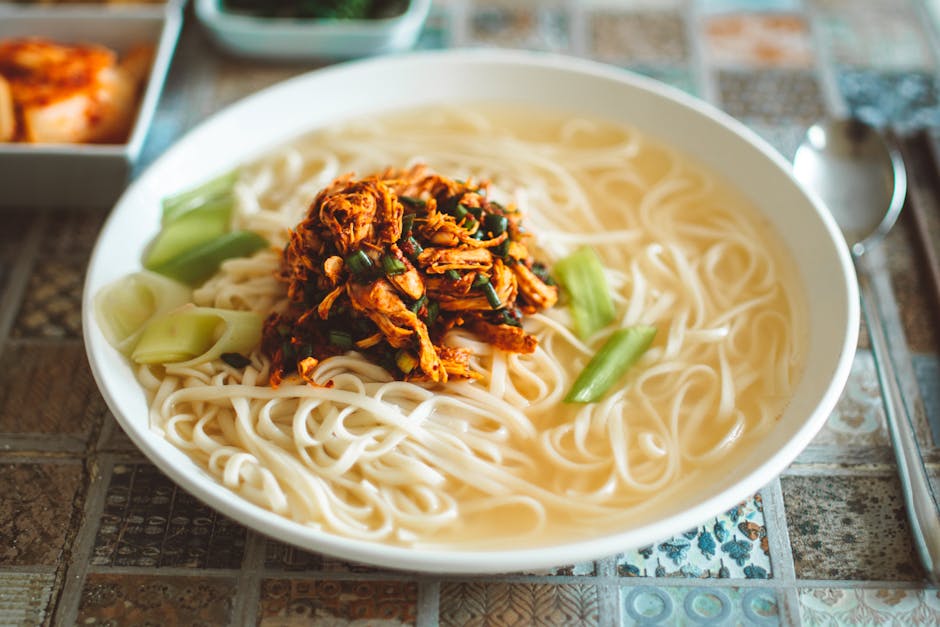
Myeongdong Kyoja is the room you visit on day one. It sits at 29 Myeongdong 10-gil, three minutes on foot from Myeongdong Station Exit 6, and it has been here, in some form, since 1966. The headline dish is kalguksu — hand-cut wheat noodles in a clouded chicken broth, finished with minced beef-and-pork dumplings and a sharp side of fermented kimchi that is, by house tradition, made and served quite young. The Michelin Guide Korea has carried Myeongdong Kyoja on its Bib Gourmand list for multiple consecutive years, and the room runs on a kind of professional efficiency that is satisfying to watch. Hours run 10:30 to 21:30 daily. Price range sits between ₩10,000 and ₩15,000 per dish. English, Mandarin and Japanese menus are on the table; staff handle pointing-and-ordering with calm. The line moves quickly. The Bib Gourmand mention and the visit-seoul restaurants directory are the canonical public references. Order the kalguksu-mandu combination — the dumplings are the second house signature and arrive in their own bowl with a clear ginger-soy. The room is sprawling and multi-floor; the upper floors are typically quieter at peak hours. The kimchi refills are free and brought without asking, which is itself a small editorial pleasure in the middle of central Seoul. Editorial cadence note: this is a fifty-minute lunch, not a ninety-minute one. The kitchen and the dining room are choreographed to turn tables briskly, and the dish itself rewards rapid eating because the noodles change body as the broth cools.
Featured B — Hadongkwan
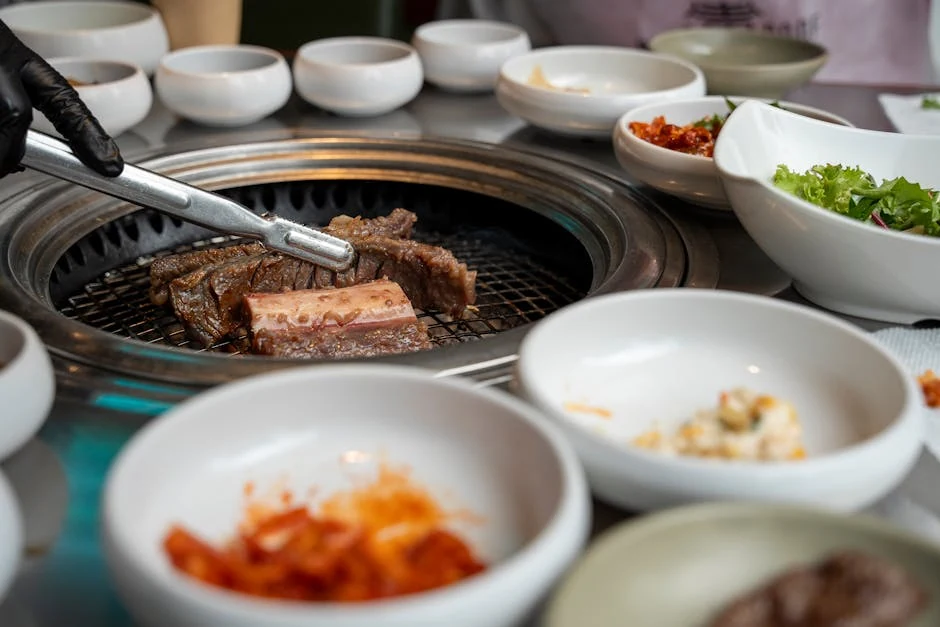
Hadongkwan is the early-lunch room, and the reason is structural — the kitchen closes at 16:00. Open since 1939 and now four generations into the same gomtang (clear beef-bone soup) recipe, Hadongkwan is one of the oldest continuously operating restaurants in central Seoul. The dining room is plain in the way that old institutions tend to be: brass bowls, white rice, a small dish of kkakdugi cubed-radish kimchi, and a pale broth that gets its body from a slow, long simmer rather than from added seasoning. The address is 12 Myeongdong 9-gil, four minutes from the station. Hours are 07:00 to 16:00 daily. Price range runs ₩15,000 to ₩25,000. There is an English menu and basic English at the counter. The Michelin Guide Korea, visit-korea, and Time Out Seoul all cite Hadongkwan as a defining Seoul gomtang reference. Treat the early close-time as part of the editorial logic of the visit — Hadongkwan is, structurally, the most authoritative breakfast-as-lunch in Myeongdong. Order the gomtang gongkibap (gomtang with rice on the side rather than dropped into the bowl) the first time. On a second visit, ask the counter for the older-style variant with brisket trimmings, which the four-generation family has preserved as a quietly available option. The brass-bowl setting and the lack of seasoning at the table — diners adjust their own bowls with sea salt and chopped scallion from a small caddy — read, in 2026, as a kind of editorial luxury. Hadongkwan does not chase modernity, and the result is the cleanest gomtang reading in central Seoul.
Featured C — Mokmyeoksanbang
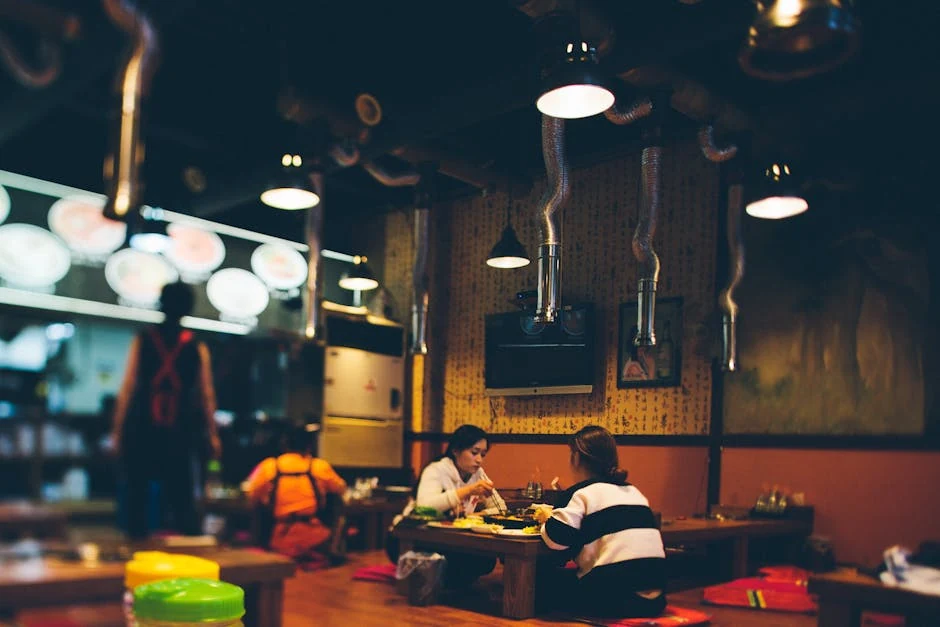
Mokmyeoksanbang is the quiet hour. The address — 1-5 Toegye-ro 20-gil, on the lower foothills of Namsan, immediately south of the Myeongdong main strip — places the dining room a few minutes' uphill walk away from street-level noise. The interior is a traditional Korean wooden room with low light, and the headline dish is bibimbap: warm rice in a stone bowl, finished with seasoned vegetables, a small amount of beef, and a quietly insistent gochujang. Hours run 11:00 to 20:30 with last orders at 19:30. Price range sits between ₩10,000 and ₩15,000 per bowl. An English menu is available. The visit-seoul portal and Time Out Seoul both list Mokmyeoksanbang in their Namsan-area restaurant routings. Editorial note: this is the room to choose on the afternoon you have just walked the Namdaemun-to-Namsan stretch and need a sit-down meal with longer silences. The bibimbap arrives in a heavy stone bowl that continues to cook the bottom layer of rice into the room's signature nurungji crust — eat the top quickly, mix the bowl thoroughly, and let the bottom layer crisp before scraping it loose. Order the doenjang-jjigae alongside; the soybean stew is a quieter accompaniment than the more aggressive kimchi-jjigae you will find in other Myeongdong rooms, and its earthiness reads against the bibimbap rather than competing with it. The dining room's interior lighting is the lowest of the seven Featured rooms, which makes Mokmyeoksanbang the natural choice for the post-walk afternoon meal.
Featured D — Jinju Jip Samgyetang
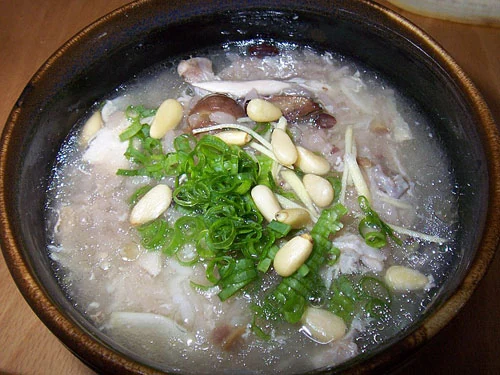

Jinju Jip is the Euljiro samgyetang specialist, and one of the two reasons we treat the Myeongdong–Euljiro food corridor as a single editorial unit. The dish is samgyetang in its classical form: a young chicken stuffed with glutinous rice, garlic, jujube and Korean ginseng, simmered until the bird is poised between holding shape and surrendering. The address sits in the Euljiro 3-ga station area, a six-to-eight-minute walk north of Myeongdong Station. Hours run 10:00 to 21:00. Price range sits between ₩15,000 and ₩20,000. An English menu is available at the table. The visit-korea and visit-seoul portals both reference Jinju Jip within their Euljiro and Myeongdong samgyetang itineraries. Read this room as the heat-of-summer entry on the list — Korea's sambok tradition of eating samgyetang on the year's three hottest days is a real seasonal pulse, and Jinju Jip is where to read it from the inside.
Featured E — Tosokchon Samgyetang
Tosokchon is the samgyetang house that international visitors know first, and the only address on this list that asks you to step outside the immediate Myeongdong walking radius. It is in Seochon, on the western side of Gyeongbokgung Palace — a fifteen-minute taxi from Myeongdong or a single subway transfer to Gyeongbokgung Station. The address is 5 Jahamun-ro 5-gil, Jongno-gu. Tosokchon's samgyetang is denser in broth than Jinju Jip's, and the bowl is built around a fuller herbal profile. The room is a converted hanok with low ceilings and a steady queue. Hours run 10:00 to 22:00. Price range sits between ₩18,000 and ₩22,000. English, Japanese and Mandarin menus and front-counter staff are standard. Tosokchon appears on visit-seoul, CNN Travel's Seoul restaurants longread, and Time Out Seoul. The editorial reason to include a non-Myeongdong samgyetang house on a Myeongdong list is simple — comparing Tosokchon and Jinju Jip on consecutive days is how a visitor actually understands the dish.
Featured F — Pildong Myeonok
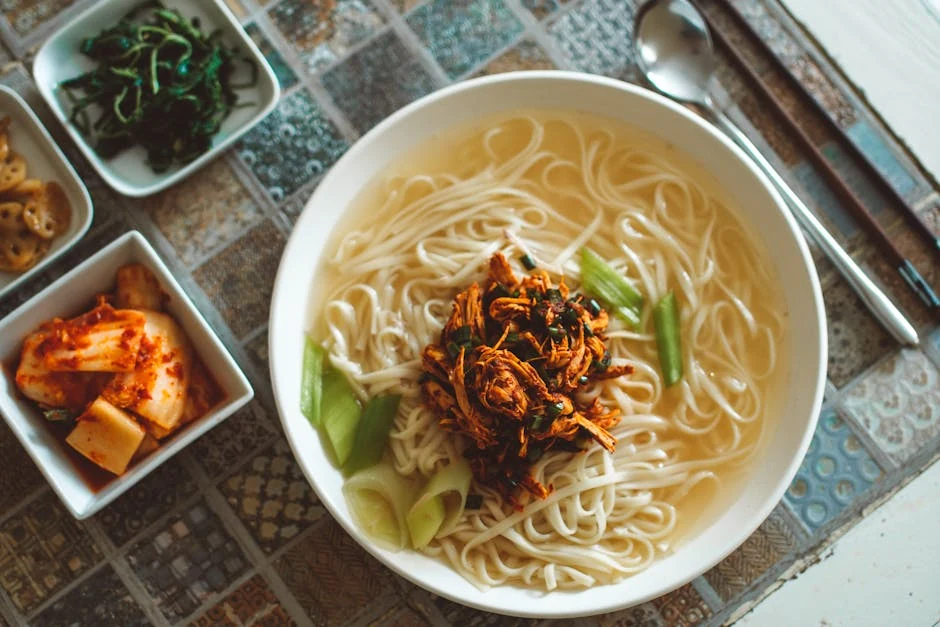
Pildong Myeonok is one of the two canonical Seoul references for Pyongyang-style mul-naengmyeon, the cold buckwheat noodle dish that defines summer Seoul lunch. The address is 26 Seosomun-ro 11-gil, in the Chungmuro–Pildong block immediately south of Myeongdong. The broth is intentionally restrained — clean, faintly mineral, lightly tart — and the noodles are pulled with the particular elasticity that buckwheat gives when handled by a long-tenured kitchen. Hours run 11:00 to 21:00 with a mid-afternoon break from 15:30 to 17:00. Price range sits between ₩13,000 and ₩18,000. An English menu is at the table. Pildong Myeonok has carried the Michelin Guide Korea's Bib Gourmand mention and is referenced in Time Out Seoul's traditional-noodle pieces. Read this room as the temperature counter to Jinju Jip — the same Myeongdong afternoon, but a thirty-degree shift in the bowl. Pyongyang naengmyeon, as a category, divides Seoul food writers, and Pildong Myeonok sits firmly on the austere end of the spectrum — the broth carries less sweetness than the more popular Pyongyang-style rooms in Seochon and the noodle texture sits firmer than the Hamhung-style alternatives along Euljiro. First-timers occasionally find the broth's quietness disorienting; the Pyongyang style is a deliberate restraint, and it rewards a second visit even more reliably than a first.
Featured G — Eulji Myeonok
Eulji Myeonok closes this Myeongdong-Euljiro traditional Korean route with its sister naengmyeon house, the other half of the Seoul Pyongyang-style canon. The room sits along Euljiro 14-gil, six minutes' walk from Myeongdong Station, deeper inside the print-shop and metalwork alleys that define old Euljiro. The broth here has a slightly different profile than Pildong Myeonok's — a touch more savoury, a touch less austere — and the noodle texture sits a half-step softer. Hours run 11:00 to 21:00 with last orders at 20:30. Price range sits between ₩13,000 and ₩18,000. English at the door is limited, but the Korean menu carries photographs and the staff are practised at international guests. Time Out Seoul and the visit-seoul portal both anchor Eulji Myeonok inside their old-Euljiro itineraries. Editorial note: Pildong Myeonok and Eulji Myeonok are almost universally cited in pairs by Seoul food writers. Visiting both, on consecutive afternoons, is how a reader of this magazine should plan to read the dish.

Seven Myeongdong Korean restaurants — quick reference table
The reference table below collapses the seven Featured entries into a single planning surface. Walking time is measured from Myeongdong Station Exit 6 or 8, the two exits that handle most visitor traffic. Price ranges are per-person at lunch and reflect the house's signature dish. Hours are subject to occasional same-day adjustment for traditional Korean holidays; confirm via Naver Map or Kakao Map the morning of your visit.
| Featured | Restaurant | Defining dish | Walking radius | Hours | Price range |
|---|---|---|---|---|---|
| A | Myeongdong Kyoja | Kalguksu, mandu | 3 min from Myeongdong Stn | 10:30 - 21:30 | ₩10,000 - ₩15,000 |
| B | Hadongkwan | Gomtang (beef-bone soup) | 4 min from Myeongdong Stn | 07:00 - 16:00 | ₩15,000 - ₩25,000 |
| C | Mokmyeoksanbang | Stone-bowl bibimbap | 8 min south, Namsan foot | 11:00 - 20:30 | ₩10,000 - ₩15,000 |
| D | Jinju Jip Samgyetang | Ginseng chicken soup | 6-8 min north, Euljiro | 10:00 - 21:00 | ₩15,000 - ₩20,000 |
| E | Tosokchon Samgyetang | Ginseng chicken soup | 15 min taxi, Seochon | 10:00 - 22:00 | ₩18,000 - ₩22,000 |
| F | Pildong Myeonok | Pyongyang-style naengmyeon | 7 min south, Pildong | 11:00 - 21:00 (break 15:30-17:00) | ₩13,000 - ₩18,000 |
| G | Eulji Myeonok | Pyongyang-style naengmyeon | 6 min north, Euljiro | 11:00 - 21:00 | ₩13,000 - ₩18,000 |
How to plan a two-day Myeongdong Korean food itinerary
A two-day Myeongdong traditional Korean food itinerary is the editorially natural reading of this list, because the seven Featured entries spread across complementary categories rather than competing inside one. Day one we recommend front-loading the early-close houses: Hadongkwan for a 09:00 or 10:00 gomtang opening, a slow mid-morning walk through Myeongdong main street, then Myeongdong Kyoja for a 12:30 kalguksu lunch. Spend the afternoon north in Euljiro's print-shop alleys, returning for an early dinner at Jinju Jip Samgyetang. Day two we suggest pacing more quietly: a Mokmyeoksanbang bibimbap at noon on the Namsan foothills, an hour of post-lunch walking up to the N Seoul Tower viewpoint, then a late-afternoon naengmyeon at either Pildong Myeonok or Eulji Myeonok. If a third day is available, the Tosokchon Samgyetang taxi-detour to Seochon, paired with a walk through the western Gyeongbokgung quarter, completes the comparative samgyetang reading that the Jinju Jip lunch on day one began. The pulse of this itinerary follows central Seoul's actual rhythm — early-morning institutional rooms, midday street-level kalguksu and bibimbap, late-afternoon naengmyeon and samgyetang where the kitchens are calmer and the dining rooms quieter. We deliberately omit late-night options from this Korean-traditional list; the Myeongdong late-night street-food canon is its own editorial piece.
- Day 1, 09:30: Hadongkwan, gomtang opening sitting
- Day 1, 12:30: Myeongdong Kyoja, kalguksu lunch sitting
- Day 1, 17:30: Jinju Jip Samgyetang, early Euljiro dinner
- Day 2, 12:00: Mokmyeoksanbang, Namsan-foothill bibimbap
- Day 2, 16:30: Pildong Myeonok or Eulji Myeonok, late-afternoon naengmyeon
- Day 3 optional: Tosokchon Samgyetang taxi detour to Seochon
What to know about traditional Korean dining etiquette in Myeongdong
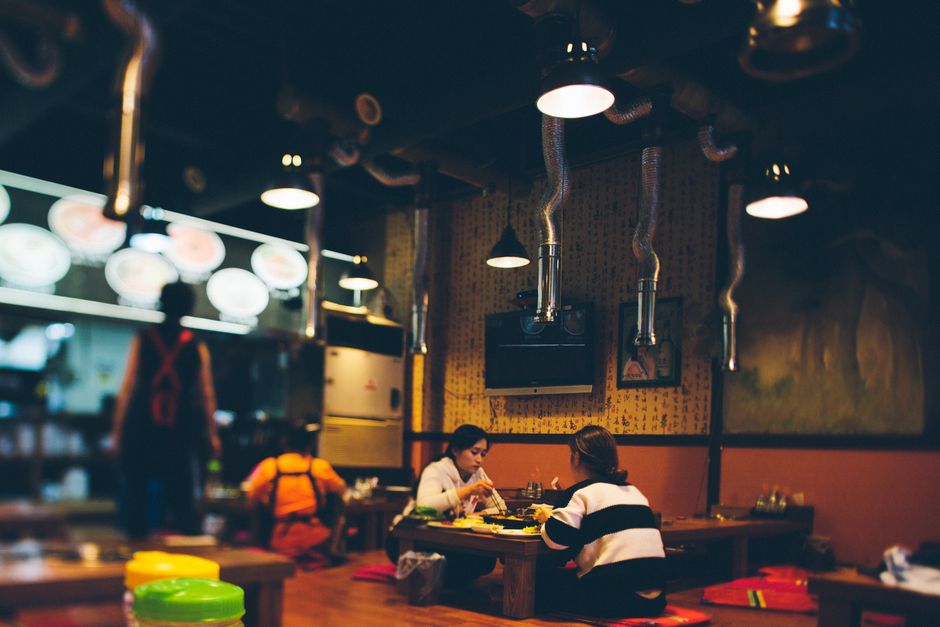
Traditional Korean dining etiquette in central Seoul rewards quiet competence — a small set of habits will read as respectful at every restaurant on this list. First, the side dishes (banchan) are shared and free-refill at all seven Featured rooms; ask the staff politely for additional kimchi or kkakdugi by gesturing with the empty side-dish saucer. Second, soup spoons rest on the right, chopsticks on the left, and the bowl stays on the table — Korean dining culture does not lift bowls toward the mouth the way Japanese dining culture does. Third, the elder at the table starts the meal; if you are visiting alone, simply wait until the staff has set down the full main bowl before beginning. Fourth, tipping is not practised at any of these restaurants, and the bill is paid at a counter near the door rather than at the table. Fifth, kalguksu and naengmyeon are best photographed quickly and then eaten quickly — the noodle bodies change texture as the broth cools, and the kitchens at Myeongdong Kyoja, Pildong Myeonok and Eulji Myeonok are deliberately timed to the dish, not to the photo. Sixth, samgyetang at Jinju Jip and Tosokchon arrives near boiling; the editorial advice is to break the bird open with a chopstick at the joint, push the broth around the bowl with the spoon for a minute to release heat, and start with the rice that has absorbed the herbal liquor. The seven Featured rooms are practised, calm and visitor-friendly — etiquette is a courtesy, not a test.
Closing field notes from the Myeongdong-Euljiro corridor
Closing field notes for a Beauty Pulse Magazine Myeongdong traditional Korean restaurant editorial cluster around three observations a returning visitor will not find in standard guidebooks. First, the Myeongdong-Euljiro corridor reads as a single dining unit. The print-shop alleys north of Myeongdong Station and the Pildong block south of the main strip are walked, on a typical day, by the same lunch-hour office workers, and the institutional restaurants on both sides — Jinju Jip, Eulji Myeonok, Pildong Myeonok, Hadongkwan, Myeongdong Kyoja — operate inside a shared kitchen culture that has been continuous since the post-war years. Reading any one of these rooms in isolation misses the corridor's structural argument. Second, the most useful editorial tool in a Myeongdong food trip is the Naver Map app rather than Google Maps. Naver carries more accurate same-day opening status, more current hours, and a Korean-language review surface that surfaces holiday closures and short-notice menu changes that the English-language travel desks tend to lag on by a few weeks. The visit-seoul portal cross-references Naver-listed addresses for several of the seven Featured rooms, and the Korea Tourism Organization's English visit-korea portal does the same. Third, the seven Featured restaurants are working kitchens, not theme rooms. The brass-bowl gomtang at Hadongkwan, the kalguksu queue at Myeongdong Kyoja, the broth restraint at Pildong Myeonok and Eulji Myeonok — these are the by-product of long, ordinary, multi-generation labour, and the editorial respect appropriate to a Beauty Pulse Magazine reader is to eat carefully, photograph quickly, and leave the dining room as it was found. Korea's institutional restaurants do not need a magazine to confirm their value; what an editorial can do is map them honestly for a visitor who is willing to walk, sit, and read the room. That is the only methodology this piece has tried to use.
Frequently asked questions
How many Korean restaurants are featured in this Myeongdong editorial?
Seven Korean restaurants are featured in this editorial, presented as Featured A through Featured G in walking order rather than as a numerical ranking. The seven addresses cover kalguksu, gomtang, bibimbap, samgyetang and Pyongyang-style naengmyeon — the foundational Seoul-traditional dish categories — across the Myeongdong, Euljiro, Pildong, Namsan-foot and Seochon walking radius.
Which restaurants in this list have Michelin Guide Korea recognition?
Three of the seven Featured restaurants in this Myeongdong editorial carry Michelin Guide Korea Bib Gourmand listings: Myeongdong Kyoja (kalguksu and mandu), Hadongkwan (gomtang) and Pildong Myeonok (Pyongyang-style naengmyeon). The Bib Gourmand category in the Michelin Guide is reserved for restaurants offering high-quality traditional cooking at moderate prices, which fits central Seoul institutional dining cleanly.
What is the price range at the seven Korean restaurants near Myeongdong?
Per-person price ranges at the seven Featured restaurants run from ₩10,000 to ₩25,000 at lunch. Myeongdong Kyoja and Mokmyeoksanbang anchor the lower end around ₩10,000-₩15,000, the naengmyeon and samgyetang houses sit in the ₩13,000-₩22,000 mid-range, and Hadongkwan's gomtang reaches ₩25,000 at the top of the range — all in the moderate central-Seoul tier.
Are these Korean restaurants walking distance from Myeongdong Station?
Five of the seven Featured Korean restaurants are within an eight-minute walk of Myeongdong Station Exit 6 or Exit 8. Mokmyeoksanbang adds a brief uphill walk toward the Namsan foothills. Tosokchon Samgyetang is the only address that requires a fifteen-minute taxi or a one-transfer subway ride to Seochon, west of Gyeongbokgung Palace.
Do the seven Korean restaurants near Myeongdong have English menus?
Six of the seven Featured Korean restaurants have English menus on the table, and most carry Mandarin and Japanese menus as well. Eulji Myeonok in old Euljiro is the one room with limited English at the door — the Korean menu carries photographs, and the staff are practised at international guests. Multilingual signage is the central-Seoul institutional norm.
Which Myeongdong samgyetang restaurant should I choose, Jinju Jip or Tosokchon?
Both Featured samgyetang houses are credible reference points; the editorial recommendation is to visit one on each of two days. Jinju Jip in Euljiro offers a leaner broth profile inside the Myeongdong walking radius. Tosokchon in Seochon offers a denser, more herb-forward broth and requires a fifteen-minute taxi west of Myeongdong toward Gyeongbokgung Palace.
What is the difference between Pildong Myeonok and Eulji Myeonok naengmyeon?
Both Featured rooms cook Pyongyang-style mul-naengmyeon, the cold buckwheat noodle dish, and are almost universally cited in pairs by Seoul food writers. Pildong Myeonok runs a leaner, more austere broth with sharper buckwheat elasticity. Eulji Myeonok runs a slightly more savoury broth and a half-step softer noodle texture. A consecutive-day visit is the standard editorial reading.
Can I find traditional Korean bibimbap inside Myeongdong itself?
Yes — Mokmyeoksanbang at 1-5 Toegye-ro 20-gil, on the lower foothills of Namsan immediately south of Myeongdong main street, is the closest traditional bibimbap room to the Myeongdong walking radius. Hours run 11:00 to 20:30 with last orders at 19:30, and the dining room is a traditional Korean wooden interior with intentionally lowered ambient noise.
Which Korean restaurant in Myeongdong opens earliest in the day?
Hadongkwan opens at 07:00 daily — the earliest of the seven Featured Myeongdong Korean restaurants — and closes at 16:00, which is also the earliest close-time on this list. Hadongkwan's gomtang is structurally a Seoul early-lunch dish; the editorial recommendation is a 09:00 to 10:00 sitting on the first morning of a Myeongdong Korean food itinerary.
Are these traditional Korean restaurants near Myeongdong open on Korean holidays?
Hours at the seven Featured Korean restaurants are subject to occasional same-day adjustment for traditional Korean holidays, particularly Seollal (Lunar New Year) and Chuseok (Korean autumn harvest festival). Same-day confirmation via Naver Map or Kakao Map is the standard editorial workflow for central-Seoul institutional dining around either holiday.
How long has Hadongkwan been open in Myeongdong?
Hadongkwan has been continuously operating in central Seoul since 1939, making it one of the oldest continuously operating restaurants in the city. The gomtang recipe is now four generations into the same family kitchen. The dining room is plain in the way old Seoul institutions tend to be — brass bowls, white rice, a small dish of kkakdugi, and a clear pale broth.
Is Myeongdong Kyoja the same as Myeongdong Gyoja or Myeongdong Kalguksu?
Myeongdong Kyoja, sometimes transliterated as Myeongdong Gyoja and often referenced simply as the Myeongdong kalguksu restaurant, is the single 1966-founded address at 29 Myeongdong 10-gil. Visitors occasionally encounter unrelated lookalike storefronts in the surrounding alleys; the canonical address is the one cited by the Michelin Guide Korea and the visit-seoul portal.
What time should I arrive at Myeongdong Kyoja to avoid a long queue?
Arrive at Myeongdong Kyoja either at 11:00 for the opening half-hour or after 14:00 for the post-peak afternoon. The Michelin Guide Korea Bib Gourmand kalguksu room runs hardest between 12:00 and 13:30 on weekdays and from 11:30 across the full weekend lunch window. Hours are 10:30 to 21:30 daily, so a late-evening visit at 20:30 is also a quiet option.
Do these Myeongdong Korean restaurants accept international credit cards?
All seven Featured Korean restaurants accept international Visa, Mastercard and JCB credit cards at the counter near the door. Tipping is not practised at any of the seven, and the bill is paid at the door rather than at the table — a standard central-Seoul Korean restaurant convention that holds at institutional addresses inside Myeongdong, Euljiro, Pildong and Seochon alike.
Are there vegetarian options at these traditional Korean restaurants near Myeongdong?
Vegetarian options are limited at most of the seven Featured Korean restaurants because the defining dishes — gomtang, samgyetang, kalguksu with beef-and-pork mandu, naengmyeon with beef broth — are built on animal proteins. Mokmyeoksanbang's stone-bowl bibimbap is the most accommodating option; ask the counter for a no-beef preparation when ordering.