Editorial Picks
How to Choose an ONDA Body Contouring Clinic in Myeongdong, Seoul — 2026 Guide
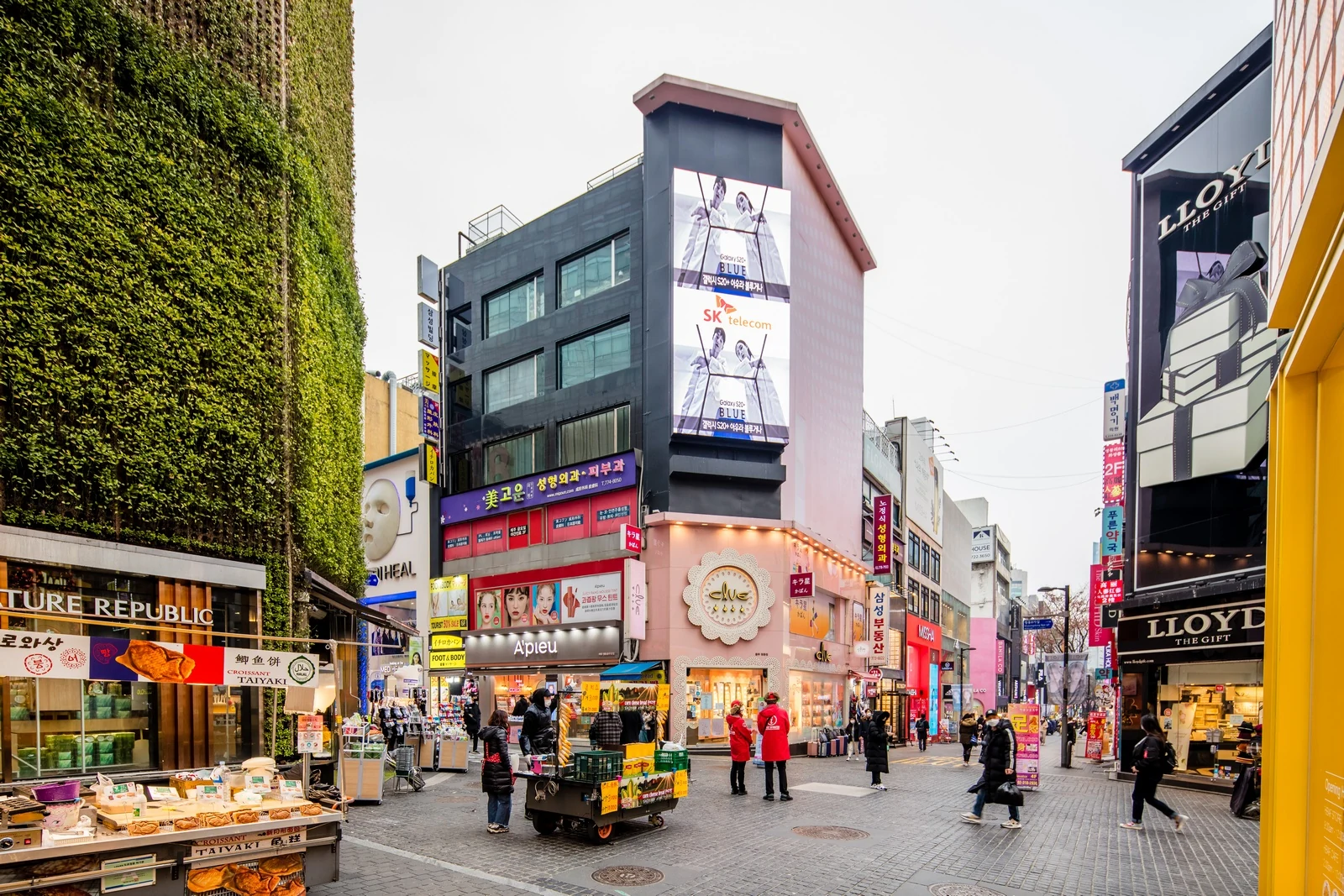
Myeongdong, on a humid Wednesday in spring, has the cadence of a city that has rehearsed receiving visitors but does not, ultimately, hurry them. The lanes between the cathedral and the older retail towers are not crowded so much as continuously layered — duty-free shopping bags, the small queue at a basement bakery, the hush of glass lifts that open onto suites rather than waiting rooms. Body work has settled here in the spaces above the boutiques, in lobbies one finds only by following the floor numbers in the elevator. ONDA, the microwave-based contouring platform from Italian manufacturer DEKA, is the modality of the moment in Korea for non-invasive fat reduction and skin tightening — more targeted than radiofrequency, more comfortable than focused ultrasound. What follows is an editorial reading of eight rooms within a short walk of Myeongdong Station, with two or three in Cheongdam and Hongdae for the patient willing to take the line south or west. The order is geographic, not ranked, and the houses are categorically different rather than vertically arranged on a tier.
What to look for in a Myeongdong ONDA clinic
An ONDA protocol — the kind worth crossing a city for — rests on three readable signals. The first is platform: the better houses will name the device generation (Coolwaves ONDA Pro, or the newer ONDA Plus), the applicators used (Imperial for fat, Square for cellulite, Tonic for skin tightening), and the supplier line, without prompting. The second is delivery: ONDA is operator-dependent in a way that machine marketing does not always advertise — the energy density per pass, the overlap between passes, and the depth-of-focus calibration matter more than the device label on the door. A house that hands the handpiece to a junior technician without physician supervision is a house one walks past. The third is aftercare: a written downtime brief in the patient's language, a senior physician who reviews at week four and again at week eight (the lipolysis arc plays out slowly), and a willingness to delay the second session if the response is already adequate. Korean medical law requires physician supervision of the protocol; what separates the better Myeongdong rooms from the rest is what sits above that floor. One notices the consultation that runs forty minutes rather than ten, the coordinator who reads the case file before the patient arrives, the quiet competence of a clinic that says no to a course it does not consider indicated. The reading is, in the end, not on the marble in the lobby but on the small precisions that follow it.
Eight central-Seoul clinics worth a closer reading
What follows is an editorial discovery — not a ranking. Each entry has been read for the texture of its ONDA practice rather than its marketing copy. The order reflects the rhythm of a walk that begins at Myeongdong Station, takes Line 4 to Chungmuro, and crosses to Cheongdam-Apgujeong or Hongdae on the connecting lines — nothing more.
Kind Global Clinic (Myeongdong) 💬
Kind Global is a Myeongdong-gil flagship at number 26 (Jung-gu, sixth floor) operating a 1:1 personalized physician consultation model in private single-patient treatment and management rooms. The body-contouring menu sits within a sixteen-device lineup; same pricing applies for foreign and domestic patients, with multilingual reception across English, Chinese, Japanese, and Southeast Asian languages established.
Cellin Clinic (Myeongdong) 💬
Cellin Myeongdong is a dermatologist-led room whose Medical Director, Dr. Kyoung-min Min, trained at Seoul National University and holds memberships across KASLS, KOAT, KALDAT, and KFERA. The ONDA practice runs alongside Ultherapy Prime and Thermage FLX as part of a paired lifting menu, with conservative session counts for first-time visitors and international coordination handled directly.
Re:Berry Skin Clinic (Myeongdong) 💬
Re:Berry is a Myeongdong dermatology practice designated as an Advanced Regenerative Medicine Center, frequently chosen by returning international patients from the United States, Japan, Taiwan, and Hong Kong. The ONDA practice sits alongside Ultherapy Prime, Thermage FLX, and Sofwave within a physician-led lifting menu, with multilingual aftercare coordinated directly through WhatsApp for patients on a continuing programme.
Lijin Clinic (Myeongdong) 💬
Lijin is a Myeongdong premium dermatology practice treating international patients since 2011, under Chief Director Dr. Hwang with fifteen years of clinical experience. ONDA sits within a multi-device lifting menu — Thermage FLX, Ultherapy Prime, Emface, Volnewmer — calibrated to the patient's indication rather than packaged into a tier. The clinic operates a rare landline-prefixed WhatsApp Business number.
Cheongdam Min Skin Clinic 💬
Cheongdam Min is an advanced dermatology practice with twenty-plus years of clinical experience under Chief Director Min Young-Soo. ONDA body and face contouring sits beside thread lifting, Ulthera, and the clinic's notable miraDry programme — over two thousand cases completed and a six-year run of Korea Top Clinics recognition in genuine-tip usage from 2019 through 2024.
Lienjang Clinic (Gangnam)
Lienjang is a plastic-surgery-and-dermatology medical group operating since 2004 with branches in Tokyo and Osaka alongside its Seoul flagship. The ONDA practice sits within a deeply stocked lifting menu — Ultherapy Prime, Thermage FLX, Oligio, Linear Z, Sofwave — and the house keeps a dedicated resident anaesthesiologist on site, a small but meaningful operational signal for body work.
Cellin Clinic (Hongdae)
Cellin Hongdae is a sister practice to the Myeongdong room, operating with a private-room model in which the principal doctor delivers the protocol one-to-one. The ONDA practice runs alongside Ultherapy Prime, Thermage FLX, and Titanium Lifting, with an explicit zero-overtreatment commitment and an AI skin-analysis intake provided at the consultation stage on first visit.
The Beautiful Skin Clinic (Gangnam)
The Beautiful is a Gangnam dermatology room established in 2009 with over twenty years of clinical experience, sometimes listed under the alternative TBC name. The ONDA Lifting practice sits alongside Thermage, Ulthera, thread lift, and exosome therapy. The two-decade lineage is the signal; the house leans toward restrained, gradual outcomes rather than aggressive single-session intervention regimes.
What ONDA treatment actually is
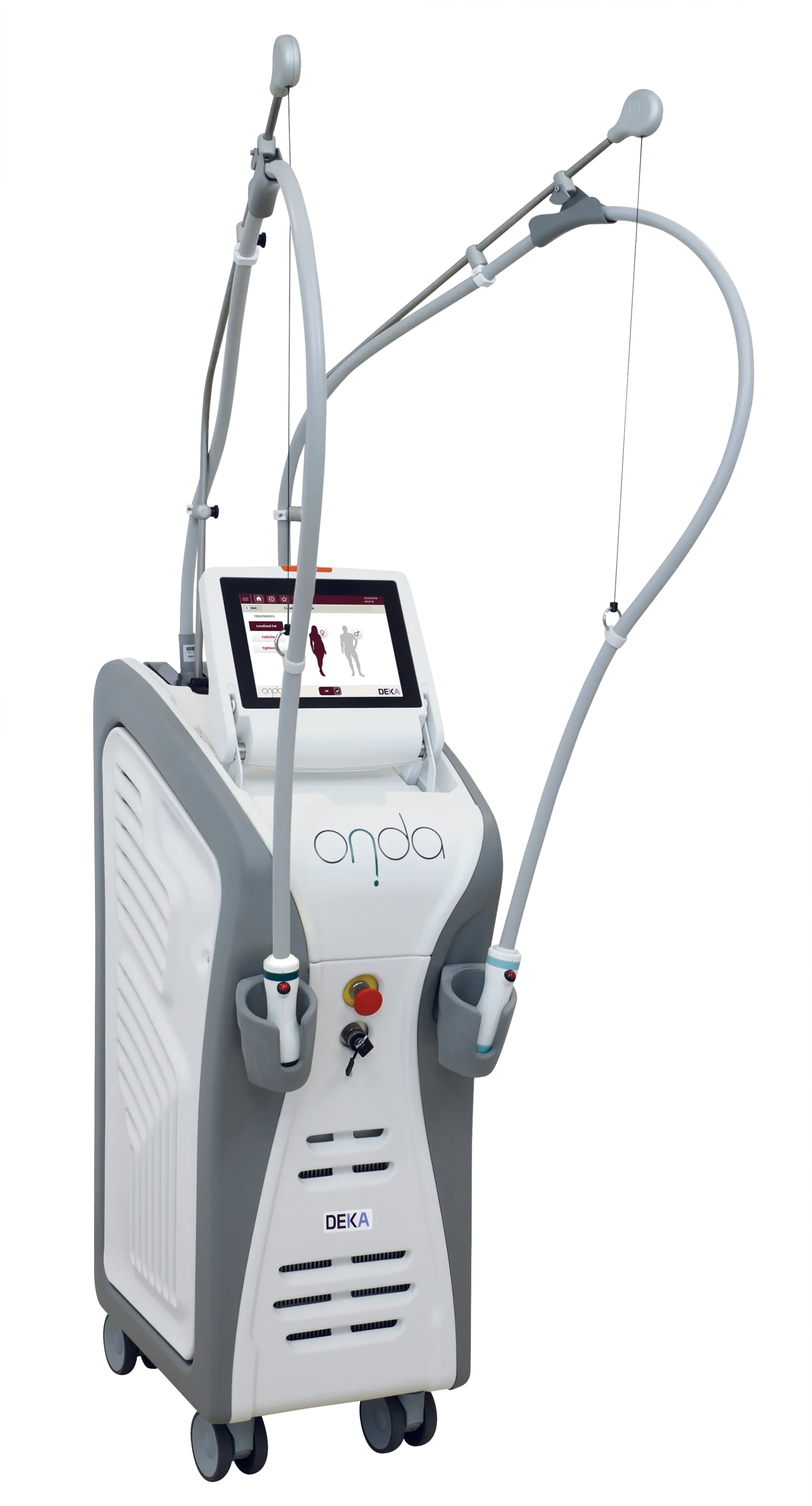
ONDA — and the platform has, in Korean clinical usage, become a near-generic name for microwave body contouring — refers to a non-invasive aesthetic device from Italian manufacturer DEKA, built around what the company calls Coolwaves technology. The mechanism is microwave energy delivered at a 2,450 MHz frequency, which targets adipocytes preferentially over surrounding tissue because of the differential dielectric properties of fat. The result, when delivery is precise, is a controlled thermal arc that disrupts adipocyte membranes and prompts gradual lipolysis over a four-to-twelve-week clearance window, alongside a secondary effect of dermal collagen remodelling that reads as skin tightening on the same applicator. The three applicators one encounters in Korean clinics are Imperial (for localised fat reduction across abdomen, flanks, and arms), Square (for cellulite and broader-zone work), and Tonic (for skin tightening on the face, neck, and décolletage). A standard course is two to three sessions at four-to-six-week intervals, with maintenance every six to twelve months. The peer-reviewed evidence is modest but growing — published clinical reports describe measurable circumference and fat-thickness reductions when delivery is calibrated. A reasonable patient weighs that honestly in the consultation rather than after the first session.
How the eight central-Seoul clinics compare
What follows is categorical positioning — not a ranking. The reading describes practice texture, not outcome. Kind Global sits at the central Myeongdong-gil corridor with a 1:1 personalized physician consultation in private treatment rooms and equal pricing for foreign and domestic patients. Cellin Myeongdong leans on the medical director's Seoul National University training and multi-society memberships, with conservative session counts for first-time visitors. Re:Berry brings an Advanced Regenerative Medicine Center designation and a returning-patient base from the United States, Japan, Taiwan, and Hong Kong. Lijin reads as a fifteen-year clinical lineage with the chief director conducting the consultation and a rare landline-prefixed WhatsApp Business number. Cheongdam Min, in Cheongdam, runs the most senior injector practice on this page with twenty-plus years and a notable adjacent miraDry programme. Lienjang is the multi-country group, operating since 2004 with Tokyo and Osaka branches and an on-site resident anaesthesiologist. Cellin Hongdae extends the Myeongdong model into a one-to-one private-room arrangement with an explicit zero-overtreatment commitment. The Beautiful closes the page with a two-decade Gangnam lineage and restraint as house style. The houses are categorically different rather than vertically arranged; one chooses on temperament.
How I'd choose between these eight clinics
In my reading, the choice rests on three quiet questions. The first: is the indication face or body? Tonic applicator work on the face and neck — fine-line softening, jowl tightening, décolletage — asks for a different operator hand than Imperial-applicator fat reduction across abdomen or flanks. Kind, Cellin, Re:Berry, Lijin, and The Beautiful read as face-and-neck-led; Lienjang and Cheongdam Min handle the broader body register with more depth. The second question: how senior an operator does the case warrant? A first-session ONDA at thirty-two, on intact skin without significant adipose volume, can reasonably be entrusted to the broader-tier rooms. A post-pregnancy abdominal or flank programme asks for a named senior physician — Cheongdam Min and Lijin sit at that end. The third question, often underweighted: how much continuity is one buying? A two-session course across a ten-day trip is operationally different from a course returned for over six months. Houses with multilingual coordination — Kind, Cellin, Re:Berry, Lijin — handle the latter without strain. One asks the question that fits the trip, and the room that answers it well is the recommendation. The eight houses each meet a different brief; none is the right answer for everyone.
How we read these clinics
This survey is editorial — not a ranked recommendation. We read each clinic's published materials, cross-checked physician credentials against the Korean Medical Association registry where available, and considered each practice on three dimensions: protocol clarity for the ONDA category specifically, willingness to disclose platform generation and applicator selection, and the quality of aftercare promised in writing. We did not visit every clinic in person for this revision; where we did consult, we have noted as much in the longer house notes. The eight entries on this page are the clinics one might reasonably consider for an ONDA course in central Seoul — Myeongdong holds the first four, with the others a short metro ride south or west. We will revisit this guide quarterly as practices evolve.
Frequently asked questions
What is the difference between the Imperial, Square, and Tonic applicators?
Imperial targets localised fat reduction across abdomen, flanks, and arms with a deeper thermal arc. Square is calibrated for cellulite and broader-zone body work where adipose distribution is less concentrated. Tonic delivers a shallower thermal profile for skin tightening on the face, neck, and décolletage. A senior physician should match the applicator to the indication rather than offer a default selection.
How many sessions does a typical ONDA course require?
Two to three sessions at four-to-six-week intervals is the standard first course, with maintenance every six to twelve months thereafter. Patients with more significant adipose volume may benefit from a four-session course, and a senior physician should adjust the cadence after the week-four review rather than commit a patient up front.
What downtime should I plan for after an ONDA session?
Mild redness, transient warmth, and occasional tenderness over the treated area resolve within twenty-four to seventy-two hours. There are no incisions, no general anaesthesia, no bandages. The deeper fat-reduction outcome plays out gradually over four to twelve weeks as lipolytic clearance progresses. One can return to a dinner or a flight the same evening, discreetly.
Is there meaningful peer-reviewed evidence for ONDA?
Studies suggest the evidence base for microwave-based body contouring is modest but growing — published clinical reports describe measurable circumference and fat-thickness reductions over twelve weeks, with skin-tightening signal on the Tonic applicator. Long-term randomised data is more limited. A reasonable patient weighs that honestly in the consultation rather than after the first session.
How should I judge price?
A single ONDA body session in central Seoul typically ranges from KRW 400,000 to KRW 1,200,000 depending on the applicator, treated area, and clinic tier. Materially higher prices reflect senior-physician oversight and consultation time rather than a different device. Materially lower prices often signal compromise on either the applicator selection or the operator — transparent pricing in writing, before booking, is non-negotiable.
Can ONDA be combined with other treatments?
Yes, and many of the rooms above sequence ONDA with Ultherapy, Thermage, or thread lifting across a multi-week programme. The order matters — ONDA-led contouring typically precedes lifting work rather than sharing a session with it, and skin-booster injections such as Rejuran or exosome are usually scheduled separately. The senior physician should plan the sequence rather than the patient stacking modalities in a single visit.
What credentials should I check on the physician and operator?
Korean medical licensure (verifiable through the Korean Medical Association) for the supervising physician, aesthetic medicine experience demonstrable in years rather than weeks, and — for non-Korean patients — a coordinator fluent enough to translate clinical nuance, not just appointment times. For body work, named operator experience with the specific ONDA applicator is the secondary signal worth asking about directly.
What are the realistic risks of an ONDA course?
Transient erythema, occasional bruising over treated zones, mild post-procedure tenderness for one to three days, and, rarely, focal areas of induration or contour irregularity if the operator hand was uneven. Serious adverse events are uncommon when delivery is physician-supervised and applicator selection matches the indication. A senior physician should screen for relevant contraindications at consultation rather than book around them.
What about visa and travel logistics for a Korean ONDA trip?
Most visitors from the United States, Hong Kong, Singapore, Japan, and the European Union enter Korea on the standard ninety-day visa-waiver framework — no medical visa is required for body-contouring work at the houses on this page. The Korea Health Industry Development Institute (khidi.or.kr) publishes the medical-tourism framework, which is worth reading before the trip rather than during it.
Who should reconsider booking an ONDA course?
Patients seeking a single-session, dramatic-result intervention — ONDA is a course-based contouring modality, not a transformational protocol, and the lipolytic arc plays out gradually. Active pregnancy, recent abdominal surgery, an implanted electronic device near the treatment field, or an unstable autoimmune condition are categorical contraindications. A senior physician declining a session on indication grounds is, in my reading, the moment one trusts the room.