Treatment Guide
Ultherapy in your thirties
The preventative framing, what early laxity actually looks like, how a Myeongdong physician decides whether the platform belongs in a thirty-something's calendar yet, and the honest cost-benefit conversation you should be having before you book.
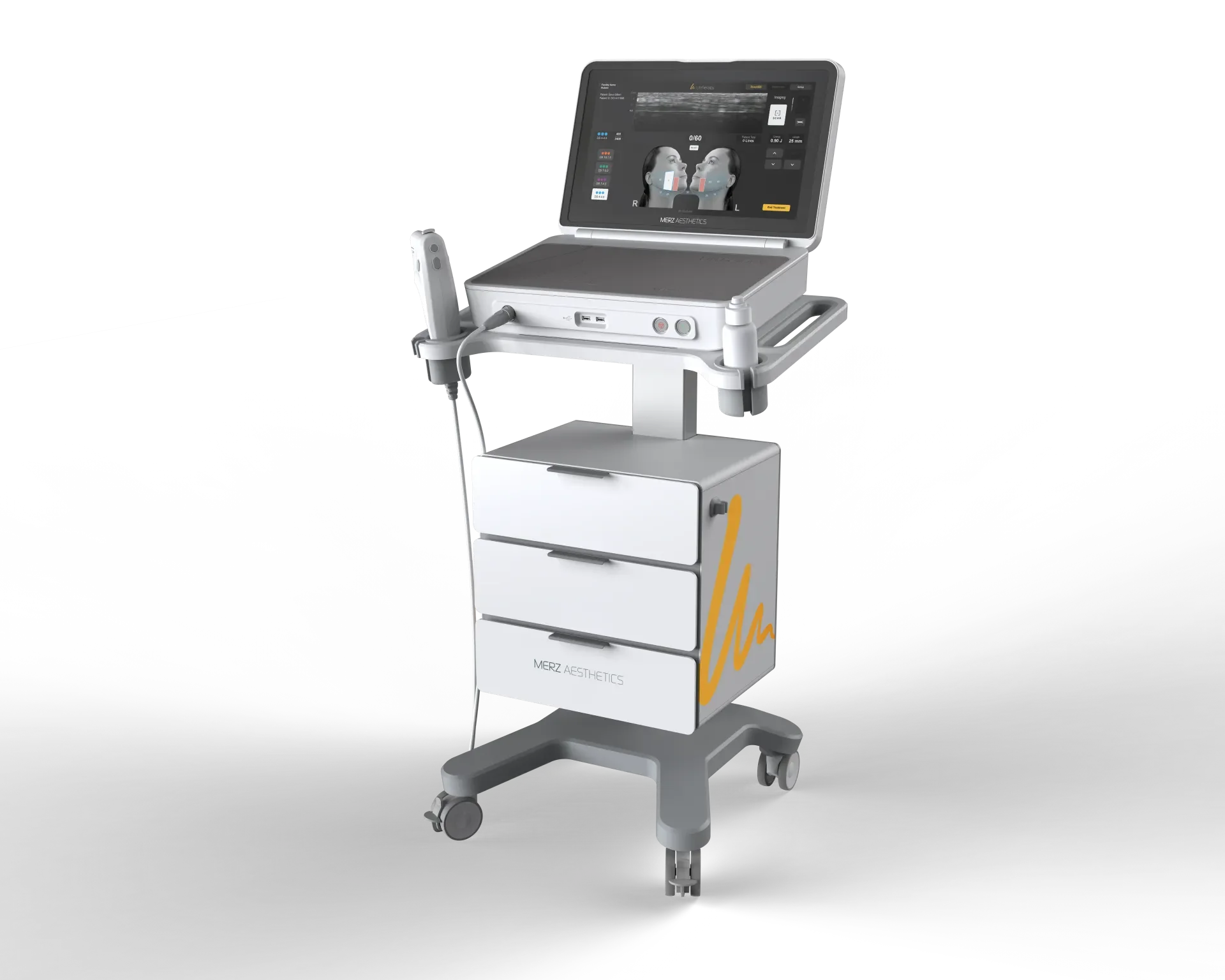
I want to start this page with a piece of warmth that the marketing copy around Ultherapy in your thirties rarely manages, because the question of whether to begin this treatment at thirty-two, thirty-five, thirty-eight is one I get asked by friends as often as by readers. The honest answer is more interesting than the marketing suggests. There is no single age at which the platform becomes appropriate, and no age at which it stops being preventative and starts being corrective. The face changes on its own clock — some women at thirty-three are already reading the first signs of laxity in their lateral brow and submental angle, and others at forty-one see no structural change yet at all. What matters is not the number on the birthday card but the assessment in the consultation room. If a careful physician, with a good lateral photograph, can identify the early markers of the structural changes the platform is designed to address, the conversation makes sense even at thirty-one. If the markers are not there, the conversation is premature even at thirty-eight, and the honest Korean physician will say so. This page walks through what early laxity actually looks like, the preventative framing as I understand it from the published clinical literature and from Myeongdong consultations, and the cost-benefit conversation a thirty-something traveler should have with herself before booking. The Merz Aesthetics platform has clearance for moderate skin laxity; what 'moderate' means at thirty-three is a different conversation than what it means at fifty-two.
What early laxity actually looks like in your thirties
Early laxity in the thirties is rarely the kind of change a friend would notice in a casual photograph. It is the change the patient herself notices first, usually in side-profile photographs taken under bright light, or in front-camera selfies at angles that compress the lateral brow downward. The classic early markers are subtle: a lateral brow tail that sits a little lower than it did in the wedding photographs, a submental angle that has lost a small amount of definition, a tail of the jawline that is no longer quite as crisp as it was. None of this reads as ageing in the conventional sense. It reads as the face having moved a few millimetres in a few places, and a careful eye — particularly the patient's own eye looking at five years of photographs side by side — can identify the change. The better consultations begin with the physician asking the patient to bring three or four reference photographs so that the conversation has a visual anchor rather than relying on memory.
The preventative framing — what it does and does not mean
The phrase 'preventative Ultherapy' is used widely and deserves more precise definition than it usually gets. The platform does not prevent the biological changes that cause facial laxity over time — those are driven by collagen turnover, photodamage, hormonal cycling, weight fluctuation, and gravity, none of which a microfocused ultrasound device can pause. What it can do, when applied to a face that has just begun to show the first markers of structural change, is initiate a fresh round of collagen remodelling in the dermal and subdermal layers. The effect is to reset the face's structural starting point a small distance toward where it was a few years earlier. That is what 'preventative' actually means here — not preventing the future, but giving the future a slightly stronger starting position. The platform in the thirties is best understood as a maintenance investment in collagen architecture, not as a procedure that postpones ageing in any biological sense.
Why physician assessment matters more at this age
At fifty-two, the question of whether Ultherapy is appropriate is mostly a question of whether the patient's expectations are calibrated correctly. At thirty-three, the question is genuinely different, because the changes are subtle enough that an honest physician has to do the harder work of deciding whether they are there at all. This is why the consultation matters more than the platform at this age. A clinic that runs the consultation in five minutes and proceeds straight to a shot-count quote is not engaging the question that needs to be engaged. A clinic that photographs the patient at multiple angles, compares those photographs with reference images from her twenties, and then has a frank conversation about whether the markers are there yet — that is the clinic worth a four-hour flight. The Korean Society of Dermatology and the Korean medical-tourism infrastructure have produced a generation of physicians practiced at this kind of careful early-laxity assessment.
What the platform realistically does in the thirties
When the platform is applied to a face that is genuinely showing early markers of structural change, the result at twelve weeks is usually subtle and quietly satisfying. The lateral brow elevation — a millimetre or two at twelve weeks — sits more visibly on a thirty-something face than on a fifty-something one, because the surrounding tissue is healthier and the collagen response is stronger. The submental angle, if treated, often reads as slightly more defined at three months. The jawline shows a faint tightening that the patient notices in side photographs more than in mirror impressions. None of this reads as a transformed face. It reads, in the editorial framing I use for all my Ultherapy coverage, as a face that looks well-rested. Friends and family usually cannot identify what changed, only that something looks slightly better. That is the platform's signature at every age and it is particularly soft at thirty-five.
When the answer should be 'not yet'
I want to spend a paragraph on the patients who walk into a Myeongdong consultation at thirty-one or thirty-two and should be told, kindly, that the platform is not the right answer yet. The most common version is a patient whose primary concern is texture, tone, fine lines, or pigmentation rather than structural change. The platform does not address those concerns — it is not a resurfacing treatment, and a patient whose face is structurally stable but whose skin is reading dull or uneven should be having a different conversation. The second version is a patient with a face that is genuinely young and structurally untouched, who has come to the consultation because of social-media exposure rather than because she has identified specific markers in her own face. The honest physician will sometimes say 'come back in three years' to this patient, and that answer is a sign of clinic quality. The clinics that say yes to every consultation are not the clinics that serve their patients well over the decade.
How to read your own photographs honestly
Before the consultation, I usually suggest that thirty-something patients spend half an hour with their photographic record from the past five to seven years — wedding photographs, early holiday photographs, work headshots. Compare those images to current photographs taken in similar light and angles. The change, if it is there, will be most visible at three places: the lateral brow position, the submental angle, and the tail of the jawline. None of these are the places the patient looks at most in the bathroom mirror, which is part of why the change usually goes unnoticed until a specific photograph triggers the realisation. If the photographs show no clear change, the consultation may end with a 'not yet' and that is the right outcome. If they show a small but identifiable shift, the conversation moves forward into whether the platform fits or whether something else — a different modality, a structural intervention, or ongoing observation — is the better answer.
Cost-benefit framing — is the trip worth it in your thirties
A trip to Korea for a single Ultherapy session is a meaningful investment of time and money. For a fifty-something patient with substantial structural change, the cost-benefit calculation is straightforward; the result is visible enough to make the trip feel worthwhile. For a thirty-something patient with subtle early laxity, the calculation deserves more honest scrutiny. The result will be visible — but quietly so, and the kind of change the patient herself notices in side photographs more than the friends she sees every week. The framing I find most useful: if the patient is already planning a holiday in Korea and the treatment fits inside that holiday, the additional cost sits comfortably alongside the trip's expenses, and the structural reset is a meaningful contribution to her photographic record over the next decade. If the trip would be made primarily for the treatment, the calculation is more demanding and the patient should be more sure than usual that the markers in her face actually justify the journey.
Planning a first session at this age — practical notes
A first Ultherapy session in the thirties is usually a lighter-touch protocol than the equivalent at fifty. The shot count tends to be lower because the structural changes are smaller and the dermal layers are healthier; the physician's task is to initiate a collagen response in zones that have just begun to soften rather than to lift tissue that has fallen considerably. A typical first session at this age might run between three and four hundred shots across the full face. The session takes about the same amount of time as a fifty-something protocol, the topical anaesthesia is identical, and the result peaks at the same twelve to sixteen weeks. The honest expectation is that the result will be more subtle than social-media marketing photographs suggest, and that the patient will need to photograph herself carefully at three months to see the change clearly.
Frequently asked questions
Am I too young for Ultherapy at thirty-three?
There is no age that is automatically too young or too old. The question is whether your face is showing the early structural markers the platform is designed to address — a slightly lower lateral brow, a less defined submental angle, a softer jawline tail. A careful consultation with photographic comparison from your twenties will answer the question more reliably than a number.
Does Ultherapy actually prevent ageing?
No. The platform does not pause the biological processes that cause facial laxity over time. What it does is initiate a fresh round of collagen remodelling in the dermal and subdermal layers, which resets the face's structural starting point a small distance toward where it was a few years earlier. That is what the preventative framing actually means in clinical practice.
How visible will the result be in my thirties?
Subtle. The platform's signature is a face that looks well-rested rather than visibly different. At thirty-five the result tends to read more strongly than at fifty-five because the surrounding tissue is healthier and the collagen response is stronger, but the change is still measured in millimetres and most clearly visible in side-by-side photographs at three months.
What if the clinic tells me I am not ready yet?
Treat that as a sign of clinic quality. The Myeongdong clinics that have been treating international patients for a decade will sometimes tell a patient to come back in three years, and that honesty is more valuable than a yes-to-everything consultation. A face that is structurally stable and showing no early markers does not yet need the platform.
Should I have the treatment if my main concern is skin texture or tone?
No, not as a first answer. Ultherapy addresses structural change in the dermal and subdermal layers; texture, tone, pigmentation, and fine lines belong to a different clinical conversation about resurfacing, regenerative work, or laser-based modalities. An honest physician will redirect you toward the right tool.
How many shots will a first session at this age involve?
Typically three to four hundred across the full face, though the count varies considerably with the assessment findings and the physician's protocol. The shot count tends to be lower than for an older patient because the structural changes being addressed are smaller and the dermal layers are healthier. Ask for the proposed count in writing during the consultation.
When will I see the result?
First visible change usually appears between weeks four and six. The result peaks between three and four months as collagen remodelling matures. Photograph at baseline and at three months in identical lighting and angle to track the change reliably — daily mirror impressions dull the eye to gradual difference.
How often should I repeat the treatment if I start in my thirties?
There is no single right answer. Some patients return for a smaller maintenance session at twelve to eighteen months; others go two to three years between full sessions; others treat the first session as a one-off investment and wait until structural change reasserts itself before considering a second. The honest answer comes from photographic review at each twelve-month mark rather than from a fixed schedule.