Treatment Guide
Ultherapy PRIME vs Original Ultherapy
What actually changed between the generations, what stayed the same, and how to verify which platform a Myeongdong clinic operates.
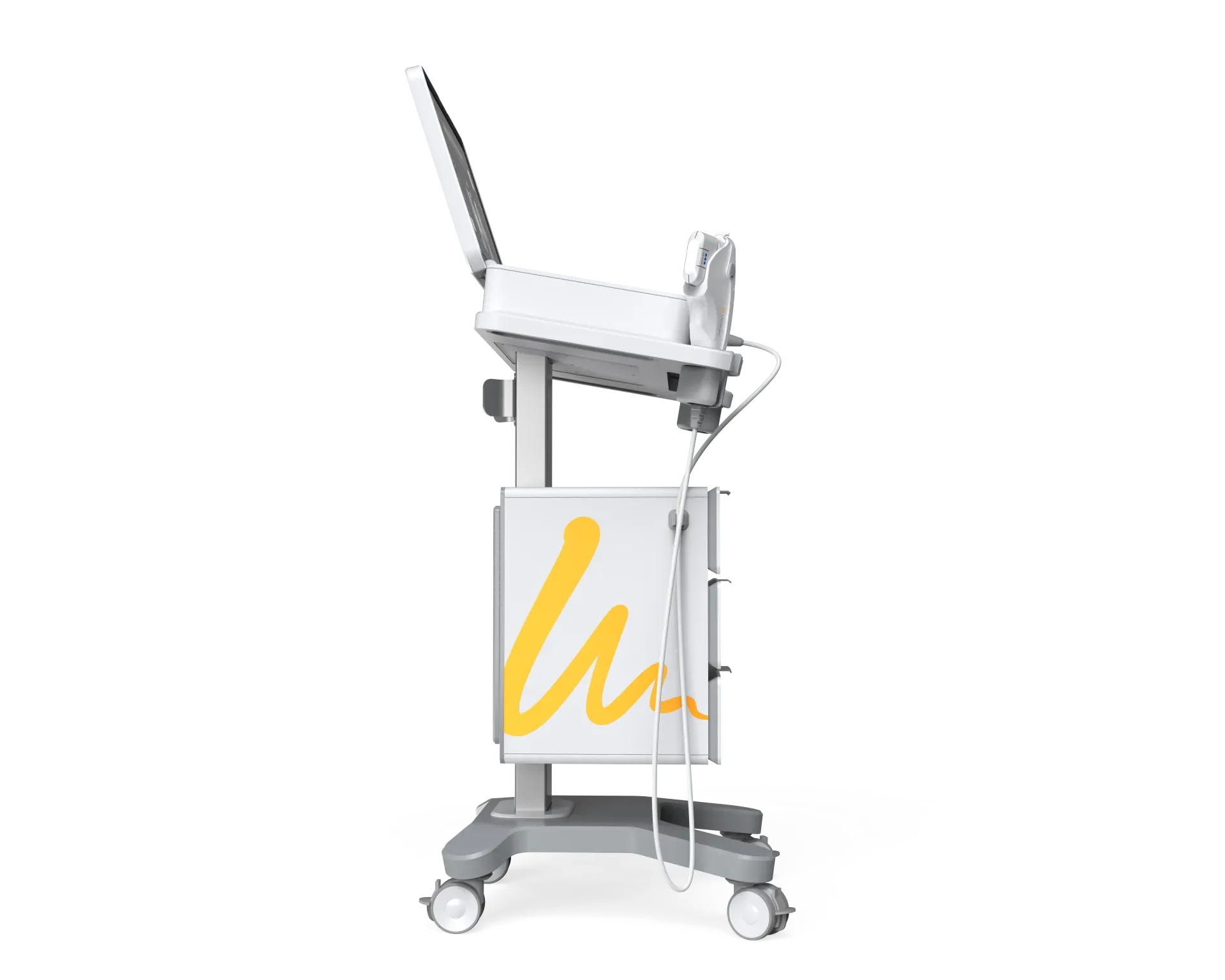
When a clinic in Myeongdong quotes you a price for 'Ultherapy', the next question I want you to ask is: which generation? The answer matters more than the marketing materials suggest, and less than some clinics imply. Merz Aesthetics, the German manufacturer that produces this platform, has shipped the Ultherapy line in two clinically meaningful generations: the original Ultherapy with DeepSEE imaging, which dominated the Korean market from roughly 2012 through the early 2020s, and Ultherapy PRIME, the current generation that began shipping in late 2022 and has progressively replaced the original on the better Korean clinical floors. Both platforms deliver microfocused ultrasound energy at three depths to trigger collagen remodelling. The clinical mechanism is the same. The patient sensation, the treatment time, the comfort margin, the spot size, and the new décolleté indication are different — sometimes meaningfully, sometimes not. This page walks through what actually changed, what did not, and how to verify which generation the clinic in front of you is operating before you commit.
What stayed the same
The clinical mechanism is identical between the two generations. Both Original Ultherapy and Ultherapy PRIME deliver microfocused ultrasound energy at three controlled depths — 1.5 millimetres, 3.0 millimetres, and 4.5 millimetres beneath the skin's surface — creating thousands of small thermal coagulation points that trigger the body's collagen-remodelling response. The targeted anatomy is the same: dermis at the shallowest depth, subcutaneous fat at the middle depth, and SMAS at the deepest. The lifting mechanism — biological, gradual, structural — is identical. The result curve is identical: visible at twelve weeks, peaks at three to six months, persists for twelve to eighteen months. The treatment areas — brow, mid-face, lower face, neck, submental — are the same. A patient who liked her result with Original Ultherapy will, in clinical terms, like her result with PRIME for the same biological reasons. A patient who is not a candidate for Original Ultherapy is not a candidate for PRIME either. The published clinical evidence base is shared between the two generations, because the mechanism of action is shared. What changed between the platforms is, broadly, the patient experience and the operator's workflow — not the biology of the lift.
What changed: spot size and treatment speed
The most operationally significant change between Original Ultherapy and PRIME is the spot size and the resulting treatment speed. The PRIME generation uses a redesigned transducer that covers a larger treatment area per pulse than the original DeepSEE handpiece, and the platform itself processes pulse sequencing more efficiently. The practical consequence is that a face-and-neck protocol that used to take seventy to ninety minutes on Original Ultherapy now runs forty to sixty minutes on PRIME for an equivalent shot count. For the patient, that means less time in the chair, less cumulative anaesthesia exposure, and a more comfortable session overall. For the clinic, that means more efficient scheduling, which on the better Korean clinical floors translates into more careful consultation time per patient rather than into squeezed treatment slots. The shot count itself does not change between platforms; a 600-shot face-and-neck protocol is a 600-shot protocol on either generation. What changes is the time and sensation cost of delivering those shots.
What changed: comfort and the patient sensation
Comfort is the change patients notice most. Original Ultherapy was famously sensation-intense; the 4.5 millimetre SMAS-depth shots, in particular, were experienced as sharp, hot, and brief, and patients without sedation often needed to pause partway through the treatment to compose themselves. The PRIME generation is meaningfully more tolerable. The redesigned handpiece, the modified pulse pattern, and the larger spot size combine to spread the thermal effect more gently across each treatment zone, which the patient perceives as a less concentrated sensation per pulse. Many patients who previously needed light intravenous sedation for Original Ultherapy now tolerate PRIME with topical anaesthesia alone. This is not the same as saying PRIME is painless — it is not. The 4.5 millimetre depth still generates a brief, sharp sensation. But the cumulative discomfort over a full session is materially lower, and the patient typically describes the session as 'manageable' rather than 'long.' For a tourist who wants to walk back into the afternoon comfortably, this matters.
What changed: the décolleté indication
The décolleté — the upper chest area, sometimes called the décolletage — is a clinical area that ages in ways the face often does not. Sun exposure, sleep position, and skin thinness produce a characteristic crepe-and-laxity pattern in the décolleté zone that has historically been difficult to address non-surgically. PRIME extended the platform's regulatory clearance to include this area, with a treatment protocol designed specifically for décolleté anatomy. Original Ultherapy was not cleared for décolleté treatment in most jurisdictions and was not used there in standard practice. For patients whose photographic concern is not only the face but also the chest area visible in evening or wedding clothing — and this is more common in pre-wedding consultations than the average international-patient website acknowledges — PRIME opens an option that did not exist with the original generation. A face-neck-décolleté combined protocol on PRIME typically runs 800 to 1,200 shots and adds twenty to thirty minutes to the treatment session.
What changed: imaging and the operator's view
Original Ultherapy was distinguished by its DeepSEE ultrasound imaging — the clinician could see the layer being treated on a real-time monitor and adjust depth and placement accordingly. PRIME retains and updates this imaging; the platform shows the operator the SMAS layer, the dermal layer, and the subcutaneous tissue in greater clarity than the original generation. The practical consequence for the patient is that depth selection on PRIME is more accurate; the platform makes it easier for an experienced operator to confirm that the 4.5 millimetre depth is engaging the SMAS rather than a too-shallow or too-deep adjacent layer. This is, in fairness, an operator-visible improvement more than a patient-visible one — the patient does not see the imaging — but it correlates with the clinical signature of the platform: the better the depth accuracy, the more reliable the lift. Operators who trained on Original Ultherapy and have moved to PRIME generally describe the imaging upgrade as the change they appreciate most professionally.
What did not change: pricing logic in Myeongdong
A fair question patients ask is whether PRIME costs more than Original Ultherapy. In Korean practice, the answer is mixed. Some clinics that run both platforms offer them at differentiated price points — PRIME slightly higher, Original slightly lower — to give patients a budget-sensitive choice. Other clinics have replaced their Original units entirely and quote a single PRIME price that absorbs the platform upgrade into the clinic's standard fee structure. In Myeongdong specifically, where international-patient demand is high, the trend has been toward PRIME-only practice; clinics that still operate Original Ultherapy alongside the new generation are increasingly the exception. When a clinic quotes a price meaningfully below the Myeongdong PRIME range, the most common explanations are either that the clinic operates the older generation, that the shot count is lower than the Myeongdong norm, or that the clinic is using a non-Merz device that is sometimes labelled 'Ultherapy-style' in international-patient marketing. All three are worth asking about plainly before booking.
How to verify which generation the clinic operates
Verification is straightforward when the clinic is straightforward. The Merz Aesthetics provider locator — the manufacturer's own database of authorised devices — lists each clinic's registered platform. A clinic operating PRIME should be willing to confirm the model number, show the patient the device on the day, and reference the Merz authorisation in the consultation paperwork. A clinic operating Original Ultherapy will say so when asked. The question is not loaded; both generations are legitimate platforms. What you are watching for is the clinic that hesitates over the question, that conflates 'Ultherapy' with a non-Merz alternative, or that uses 'PRIME' in marketing while operating the older generation in practice. The Korean Ministry of Food and Drug Safety (MFDS) approval database is another verification path; MFDS device approval is on a model-by-model basis, and the better Myeongdong clinics will share their MFDS reference number on request. The Korean Society of Dermatology publishes patient-facing guidance on how to verify aesthetic devices; the KSD English-language pages are a useful reference.
Which generation should I ask for?
If you are choosing for the first time and the clinic offers both, ask for PRIME. The comfort margin alone justifies the choice for most patients, and the décolleté option is an addition rather than a tradeoff. If you are price-sensitive and the clinic offers Original Ultherapy at a meaningful discount, the older generation remains a clinically legitimate platform — the lift you receive will be biologically the same. The honest editorial answer is that platform generation is one variable among several. Physician technique, depth accuracy, shot distribution, and appropriate candidate selection matter at least as much as which generation of the device sits in the treatment room. A skilled physician operating Original Ultherapy on a well-selected candidate will produce a better result than an inexperienced physician operating PRIME on a poorly-selected one. When you write to the clinic before your trip, ask about the generation, but ask also about the physician's training history and the clinic's photographic documentation practice. Those three together — platform, technique, candidate fit — predict satisfaction more reliably than any single variable.
Frequently asked questions
Is Ultherapy PRIME more effective than Original Ultherapy?
Effectiveness, in the sense of the lift the patient sees at three months, is similar between the two generations because the clinical mechanism is the same. The differences are in patient experience — speed, comfort — and in the décolleté indication, which PRIME adds and Original did not have.
How do I know which generation a Myeongdong clinic operates?
Ask plainly. The clinic should be able to confirm the model and reference its Merz authorised-provider listing or its MFDS device approval. A clinic that hesitates over which generation it operates is a clinic worth a second thought.
Is PRIME painful compared to Original Ultherapy?
PRIME is meaningfully more tolerable. The redesigned handpiece and pulse pattern spread the thermal effect more gently. Many patients who needed sedation for Original tolerate PRIME with topical anaesthesia alone. It is not painless; the SMAS-depth shots remain sensation-intense.
Can I get décolleté treatment on Original Ultherapy?
Generally no. Original Ultherapy was not cleared for décolleté treatment in most jurisdictions and is not used there in standard Korean practice. PRIME extended the regulatory clearance to include the décolleté zone, and it is now part of the standard PRIME indication set.
Does PRIME cost more than Original Ultherapy?
Sometimes. Clinics that run both platforms typically price PRIME slightly higher; clinics that have moved entirely to PRIME absorb the upgrade into a single fee structure. In Myeongdong, the trend is PRIME-only practice, so the choice often does not arise.
Is the treatment time really shorter on PRIME?
Yes. A face-and-neck protocol on PRIME typically runs forty to sixty minutes versus seventy to ninety minutes on Original Ultherapy for an equivalent shot count. The larger spot size and improved pulse sequencing account for the difference.
Will I see a difference in the result if I choose Original instead of PRIME?
Probably not, in terms of the lift you see at three months. Patient satisfaction studies suggest physician technique, candidate selection, and depth accuracy correlate with outcomes more strongly than platform generation. The PRIME advantages are mostly in patient experience and the décolleté indication.
If a clinic just says 'Ultherapy' without specifying, what should I assume?
Do not assume. Ask. The word 'Ultherapy' has been used loosely in some international-patient marketing to describe Original, PRIME, or even non-Merz alternatives. The clinic should be able to specify the model, the manufacturer, and the authorisation. If it cannot, that is a useful signal.