Editorial Picks
How to Choose an Ultherapy Clinic in Myeongdong, Seoul — 2026 Guide
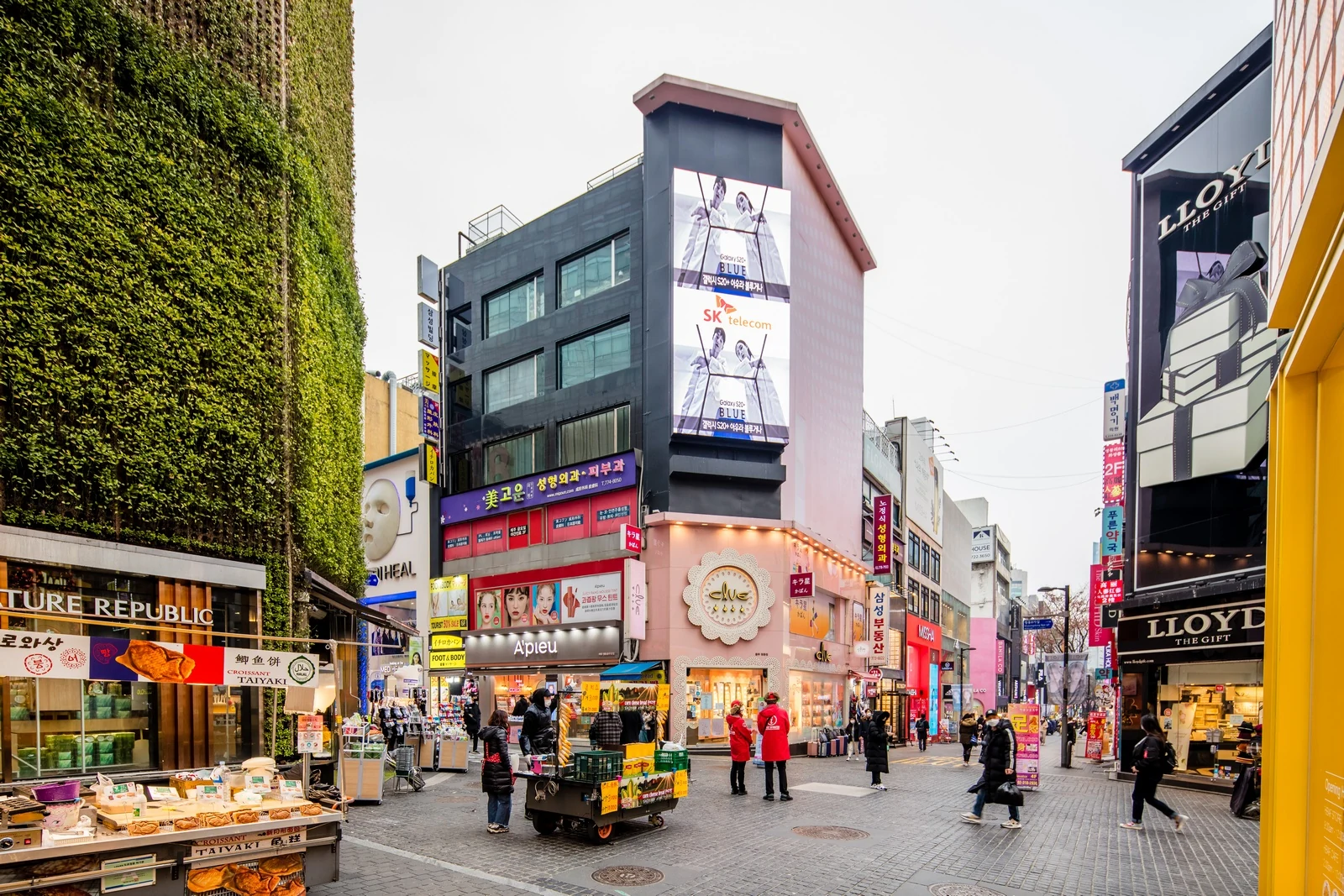
Myeongdong in the late afternoon is a particular kind of light — the glass facades along Myeongdong-gil turn the colour of weak tea, the cathedral spires hold the last warmth, and the dermatology suites a block away switch on their warm sconces one by one. Ultherapy arrived in this district as a quieter alternative to the maximalist lifting trend: a micro-focused ultrasound system that delivers thermal coagulation points at three calibrated depths beneath the surface, prompting the SMAS and dermis to contract and remodel collagen over a three-to-six month arc. The clinics worth reading on this device are those that treat Ultherapy as a precision tool rather than a counter product; that ask which transducer suits the patient's facial vector before powering on; that schedule a candid week-twelve review before booking a second pass. Nine clinics within walking or short-taxi distance of Myeongdong, read on temperament rather than tier.
What to look for in a Myeongdong Ultherapy clinic
A Myeongdong Ultherapy protocol — the kind that justifies the airfare — rests on three quiet considerations. The first is transducer selection: micro-focused ultrasound is delivered at 1.5mm, 3.0mm, and 4.5mm depths, and a clinic that matches the depth to the facial vector rather than running a printed map is signalling something about its operator seniority. One should ask, plainly, which transducer the physician plans to weight, and why. The second is line and density calibration: the better houses count lines rather than minutes, and a senior operator reads the face the way a tailor reads shoulders, adjusting line density to skin laxity rather than chart. The third is the week-twelve review: Ultherapy outcomes are graduated, and a clinic that schedules the patient back for imaging and a candid conversation before booking the second pass is one that values the result over the cadence of repeat business. Korean medical law requires a licensed physician to administer the protocol, which raises the floor. What separates the clinics one returns to from those one merely visits is what sits above that floor: the consultation that takes thirty-five minutes rather than eight; the coordinator who reads the case file in advance; the willingness to defer the second session when the first has already done the work.
Nine Myeongdong-area clinics worth a closer reading
What follows is an editorial discovery — not a ranking. Each entry has been read for the texture of its practice rather than its marketing. The order reflects the rhythm of an unhurried walk through Myeongdong-gil and the surrounding Jung-gu blocks; nothing more.
Re:Berry Skin Clinic (Myeongdong) 💬
Re:Berry's Myeongdong outpost is a dermatology practice carrying an Advanced Regenerative Medicine Center designation under Korean regulatory framework. Ultherapy Prime sits within a lifting-led menu folded alongside exosome and regenerative work, with a senior physician handling consultation. The clinic is, in our reading, frequently chosen by returning international patients from the United States, Japan, Taiwan, and Hong Kong.
Kind Global Clinic (Myeongdong) 💬
Kind Global operates a Myeongdong-gil 26 flagship inside the central tourist corridor, running a sixteen-device lineup that includes the Ultherapy platform. The practice is built around a one-to-one personalised physician consultation model, with private single-patient treatment rooms and co-directors Lee Wonjin (Daegu Catholic University Medical School) and Lee Kangin overseeing the operating floor.
Cellin Clinic Myeongdong 💬
Cellin's Myeongdong branch is led by Medical Director Dr. Kyoung-min Min, a Seoul National University-trained physician whose memberships span KASLS, KOAT, KALDAT, and KFERA. The Ultherapy Prime protocol sits alongside Thermage FLX, Onda, and regenerative booster work, with consultation conducted in the practice's calmer second-floor suite — a quieter register than the Myeongdong-gil traffic outside.
Peau Reve Skin Clinic (Cheongdam) 💬
Peau Reve is a Seoul practice running on a one-hundred-per-cent reservation basis, allocating two exclusive hours per patient. The medical lead carries Thermage FLX Master Doctor certification and Ultherapy Prime Gold Certified Clinic status, with over a decade of clinical experience. Ultherapy is administered within a longer, discreet consultation window — the operating temperament is unhurried rather than throughput-driven.
Lienjang Clinic (Gangnam) 💬
Lienjang has been operating since 2004 with a dedicated resident anesthesiologist on the floor — a credential that matters more than the brochure when sedation enters the conversation. The Ultherapy Prime menu sits within an integrated lifting register that also covers Thermage FLX, Sofwave, Onda, and exosome boosters, and the practice handles a steady international caseload across multiple languages.
Laurel Clinic (Cheongdam) 💬
Laurel's Cheongdam house, a short taxi from Myeongdong, runs lifting-led protocols where Ultherapy Prime is paired with thread-lift and regenerative work in a structured three-layer regimen. Director Dr. Joon-hyuk Hur chairs the Korean Lifting Research Society, and the clinic claims over one hundred Ultanium procedures monthly — throughput is a real consideration when reading this house.
BANOBAGI Dermatologic Clinic (Gangnam)
BANOBAGI is a twenty-two-year Gangnam dermatology practice naming two operating dermatologists — Ban Jae-Yong and Jeon Hee-Dae — and reporting patients arriving from seventy-plus countries. The Ultherapy Prime menu sits within a broader anti-ageing register calibrated for sequenced, non-invasive work, alongside forty-plus operating devices. English coordinator support is available; the taxi from Myeongdong is roughly twenty-five minutes.
Liftique Dermatology Clinic (Gangnam)
LIFTIQUE is a Sinsa-Gangnam board-certified dermatology practice naming three operating dermatologists — Sangmyung Park, Yong-yon Won, and Hyo-yoon Kim — and claiming top two per cent of Seoul physicians. The Ultherapy Classic protocol is paired with advanced diagnostic systems including Mark-Vu, used for baseline imaging and follow-up review across the lifting menu.
Reone Dermatology (Cheongdam)
Reone is a Cheongdam practice naming board-certified dermatologists alongside a dedicated on-site anesthesiologist, with the medical team trained at Seoul National University Hospital. The Ultherapy Prime protocol sits within a structured lifting register that also includes Thermage FLX, Sofwave, and regenerative boosters — an integrated platform calibrated for patients who arrive for sequenced rather than single-session work.
What Ultherapy treatment actually is
Ultherapy is a micro-focused ultrasound system that delivers thermal coagulation points at three calibrated depths — 1.5mm, 3.0mm, and 4.5mm — through transducers tuned to the dermis, the deep dermis, and the superficial musculoaponeurotic system. The device does not break the skin and does not require anaesthesia beyond topical cream; the operator sees the depth being treated through real-time imaging, which is the feature that justifies the platform over similar non-imaged ultrasound tools. The biological effect is collagen contraction at the moment of treatment and a longer remodelling response over three to six months as type I and type III collagen are upregulated. The Ultherapy Prime generation extends the depth and treatment area envelope; the Classic system remains in use at many established Korean houses for facial work. The platform is approved by Korea's Ministry of Food and Drug Safety. Typical first programmes are a single session for early laxity or two passes separated by six to nine months for moderate laxity; the senior physician should counsel which register suits the patient. The result is undramatic, which is, in this register, the highest compliment one can pay a lifting device.
How the nine Myeongdong-area clinics compare
What follows is categorical positioning — not a ranked recommendation. Re:Berry Myeongdong reads as regenerative-led, with Ultherapy Prime folded into a programme that includes exosome and Sofwave work; the returning-international-patient mix is the variable one weighs. Kind Global operates on a private-room, one-to-one consultation register, with foreign-and-domestic pricing parity and a sixteen-device platform; the consideration here is whether the patient prefers a long single-session window. Cellin Myeongdong leans on its Seoul National University-trained medical director and multi-society memberships. Peau Reve is the reservation-only longitudinal register — two hours per patient, fewer slots, longer commitments. Lienjang is the long-tenured integrated lifting house with an in-house anesthesiologist. Laurel Cheongdam is the high-throughput lifting practice running three-layer protocols. BANOBAGI is the long-tenured Gangnam dermatology operation, twenty-two years in, with forty-plus devices. LIFTIQUE is the board-certified dermatology house leaning on advanced diagnostic imaging. Reone is the integrated central-Seoul practice with on-site anesthesiology. One chooses on temperament, not on tier.
How I'd choose between these nine clinics
In my reading, the choice rests less on the brochure than on three quiet variables: who actually operates the transducer, whether the line-and-density calibration is disclosed in writing before treatment, and whether the week-twelve review is scheduled before the patient leaves the lobby. The published case literature suggests Ultherapy outcomes correlate more closely with operator seniority and depth-matching technique than with the specific device generation, which makes the named operator the variable to verify rather than assume. For international patients, multilingual aftercare — the kind handled by a coordinator who has read the case file — is, in my reading, the variable that separates a competent practice from a memorable one. If one's travel window is four to seven days and the Myeongdong walk is the priority, the closer houses suit best; if one is resident in Seoul and the longitudinal register matters, the reservation-only and integrated practices reward the longer commitment. The nine clinics above each meet a different brief; one selects on temperament, on indication, and on whether the senior physician is willing to say, candidly, that a single session has already done the work.
How we read these clinics
This survey is editorial — not a ranked recommendation. We read each clinic's published materials, cross-referenced physician credentials against the Korean Medical Association registry where available, and assessed each practice on three dimensions: Ultherapy protocol clarity, operator seniority disclosed in writing, and the quality of structured aftercare promised before the patient transfers a deposit. We did not visit every clinic in person for this revision. The nine entries here are clinics one might reasonably consider for Ultherapy within walking or short-taxi distance of Myeongdong — not the only ones. Where a commercial relationship exists with a featured house, the outbound or inline link carries rel="sponsored". We will revise this guide quarterly as practices change.
Frequently asked questions
What is Ultherapy, in plain language?
Ultherapy is a micro-focused ultrasound lifting platform that delivers thermal coagulation points beneath the skin at three calibrated depths — 1.5mm, 3.0mm, and 4.5mm. The operator sees the depth being treated through real-time imaging, which is the feature that distinguishes the platform. The effect is collagen contraction at treatment and remodelling over three to six months.
What is the difference between Ultherapy Prime and Ultherapy Classic?
Ultherapy Prime is the newer generation, with an extended depth-and-treatment envelope and broader transducer options for the lower face and neck. The Classic system remains in routine use at established Korean houses for facial work and is, in trained hands, fully capable. The choice rests on the operator's familiarity and the indication, not on the generation alone.
How many lines should the operator deliver?
Line counts vary by facial size, laxity, and indication, but the better houses count lines rather than minutes — a full-face protocol typically falls between three hundred and six hundred lines, with the breakdown across transducers disclosed in writing. A practice that declines to specify line counts before treatment is one to read carefully.
What downtime should I plan for?
Most patients see mild swelling and possible tenderness for forty-eight to seventy-two hours and, less often, small bruising at deeper treatment points that resolves within a week. There are no incisions, no general anaesthesia, and no bandages. One can attend a discreet dinner the same evening; vigorous exercise and saunas are best deferred for forty-eight hours.
How does Ultherapy differ from Thermage FLX or Sofwave?
Ultherapy uses micro-focused ultrasound and is imaged in real time. Thermage FLX uses monopolar radiofrequency across a broader treatment area for skin tightening. Sofwave uses synchronous ultrasound parallel beam technology at a single mid-dermal depth. Each platform suits a different indication; in trained hands, the three are often sequenced rather than substituted.
What should I expect to pay in Seoul?
A full-face Ultherapy Prime session in Seoul typically falls between KRW 1,500,000 and KRW 4,500,000 depending on the practice, the line count, and the inclusion of neck work. Materially lower prices may indicate counterfeit transducer cartridges or a junior operator. Transparent pricing in writing before booking is, in my reading, a non-negotiable.
What credentials should I check on the operator?
Korean medical licensure verifiable through the Korean Medical Association, lifting experience measurable in years rather than weeks, and, for non-Korean patients, a coordinator fluent enough to translate clinical nuance — not just appointment times. The named operator should appear on the consent and on the treatment record.
Can Ultherapy be combined with thread lifts or boosters?
Yes, and several of the nine practices on this page do — typically sequenced rather than stacked in one session, with Ultherapy administered before thread or biostimulator work to optimise the dermal scaffold. The senior physician should plan the order and the interval; the published case literature favours sequencing over stacking.
What are the realistic risks?
Transient swelling, mild bruising, occasional small palpable nodules along the SMAS, and, very rarely, transient nerve irritation that typically resolves within weeks. Serious adverse events are uncommon when the protocol is physician-administered with genuine transducer cartridges. A practice that discusses risk candidly before treatment is one to trust.
Who should not book Ultherapy?
Patients with active skin infection at the treatment area, implanted electrical devices in the head and neck region, severe dermatological conditions in the field, recent dermal filler placement at the same depth, pregnancy, or unstable autoimmune conditions should not proceed. A senior physician declining on indication grounds is a signal of practice quality.
How do I tell a genuine Ultherapy session from a counterfeit one?
The genuine Merz cartridge carries a holographic Korean Ministry of Food and Drug Safety authentication mark. A senior practice will, on request, photograph the cartridge and lot number in front of the patient before treatment. A clinic that hesitates is one to leave. The published outcome literature assumes genuine cartridges throughout.
What visa or travel logistics should I plan for the trip?
Most visitors enter Korea on the standard ninety-day visa-waiver framework — no medical visa is required for the consultations described on this page. A flight that allows three to seven days in Seoul is the comfortable register. The Korea Health Industry Development Institute publishes the medical-tourism framework, which one reads before the trip.